

BoltClock
A lightning alarm that turns any screen into a full-screen warning for a chosen location. When NOAA's GOES-19 shows a strike inside the radius, it sounds a siren, announces the distance, and runs an all-clear countdown.
Software engineer & architect
25+ years designing and shipping production systems, from legacy modernization to AI, with the judgment to know what's worth building and how to make it last.

For 25+ years I've designed and built software professionally, through Perl/CGI, Visual Basic, ColdFusion, Java and .NET to today's AI systems. AI lets me work in any stack without relearning syntax each time a new language appears. What carried over each time wasn't a language. It was design: clear boundaries, explicit contracts, and a quality bar that doesn't move when the tools do.
Ideas I've explored across different stacks, clouds and AI coding agents. Each one is designed and built end to end as a real product, made to ship.
A lightning alarm that turns any screen into a full-screen warning for a chosen location. When NOAA's GOES-19 shows a strike inside the radius, it sounds a siren, announces the distance, and runs an all-clear countdown.

Tidepin shows NOAA tide charts for US coastal stations on iPhone, Apple Watch, Android and Wear OS. It is built as native apps with home-screen widgets, local tide alerts and watch apps that work offline.

AI document assistant built on retrieval-augmented generation (RAG). Anyone can ask a question about an uploaded set of documents and get an answer grounded in them, with a citation for every claim.

An e-signature app with no accounts or subscriptions: magic-link verification, sequential signing, and sealed, audit-trailed PDFs built for ESIGN and UETA.

Timecode Calculator is a fast, accurate, offline timecode calculator for editors, assistant editors, DITs, colorists and post-production teams. It handles the common film and video frame rates, including drop-frame, with a history list and copy/paste.

An Atlassian Forge app for Jira Cloud that automatically adds groups and users as watchers on new issues, based on rules admins set, such as by component or filter. Users can also auto-watch a whole project, and a one-time backfill applies a rule to existing issues.

HamUpgrade is an offline mobile app that helps people study for the US amateur (ham) radio license exams: Technician, General and Amateur Extra. It uses the public-domain NCVEC question pools and keeps all progress on the device. Technician practice is free and a one-time in-app purchase unlocks General and Extra.

An autonomous AI forex trading agent that writes its own rules, publishes every trade with its reasoning, and each night adds, sharpens, or retires rules from a persistent memory of economic releases, news, policymaker posts, and live prices. Swappable microservices for economic data, news, social, and the broker feed normalize events into one core, behind a code-enforced safety boundary and kill switch around the AI's own limits.

A platform for storing, sharing and forking recipes. Cooks can save their own recipes, import them from anywhere, and build on each other's with versioned forks. Built as a collaboration between Cursor, Codex and Claude Code, with Grok Bot as project manager.

Luau Rummy is a rummy-style card game for 2 to 4 players, based on the book The Three Little Piggies and The Big Bad Wolf's Wonderful Luau. Players lay down picture melds, use Wolf wild cards and race to 50 points against the computer or friends on the same device. It runs on iOS and in the browser, with Android coming soon.
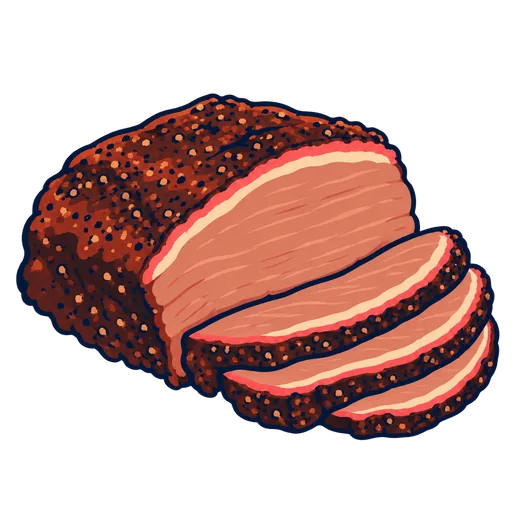
A 14 lb Wagyu brisket on 1/4" steel offset smoker infrastructure, powered by oak and hickory. Sausages ship first as canary releases, validating heat and smoke on a small batch before the main rollout. A wireless probe streams internal temperature and alerts on thresholds, so the lid stays closed in production. Ships on butcher paper.
Speed from the tools. Judgment from experience.
Every project starts with detailed requirements. The clearer the ask, the faster agents get it right. Early in a project, decisions get made with the team and conventions get written down. As agents learn to get it right the first time, they get more room, and nothing ships without review.
Architecture, contracts, tests and review stay with the engineers on the team. They are what make agent-written code production-grade.
Pushing the limits, together.
Working with AI agents is still an experiment, and that's the fun of it. I bring them onto the team the way I'd bring on any engineer, with real tasks, handoffs and reviews.
Each one has its strengths, and where one falls short, another often thrives. And that changes fast. The best agent for a task today can be overtaken by a new model tomorrow, so the team keeps adapting in real time. Orchestrating them so they work together at their best is almost an art. The advantages are huge, and the challenges are part of the work.
Picking a stack is as much a cost decision as a technical one. What lasts is understanding how engineering principles evolve, from object-oriented design to code written for machines as much as for people. With AI agents shortening the learning curve, more options are worth considering, and moving off a vendor that raises its prices is no longer a major undertaking. The right tools depend on the problem, the team and the budget.
Tell me what you're working on, whether it's a product, a system or a role to fill.